Understanding Derecho Damage: Why Cedar Rapids Trees Need Expert Assessment
The derechos that have swept through Cedar Rapids in recent years have left thousands of homeowners facing a difficult question: can my damaged tree be saved, or does it need to come down? These powerful windstorms snap branches, uproot root systems, and strip bark in ways that aren't always immediately obvious to the untrained eye. What looks like catastrophic damage to a homeowner might actually be manageable with proper care, while a tree that appears salvageable could pose serious safety risks down the road.
The key to making the right decision lies in understanding what derecho damage actually does to a tree's structural integrity and health. When a tree loses major limbs or has its crown severely damaged, it's forced to redirect energy and resources to heal and regrow. Some trees have remarkable resilience and can recover beautifully with professional intervention. Others have sustained damage to their vascular system or root structure that makes recovery impossible, no matter how much care they receive. This is where a professional hazard tree assessment becomes invaluable for homeowners trying to protect both their property and their landscape.
Tree Trimming vs Tree Removal: Key Differences and When Each Applies
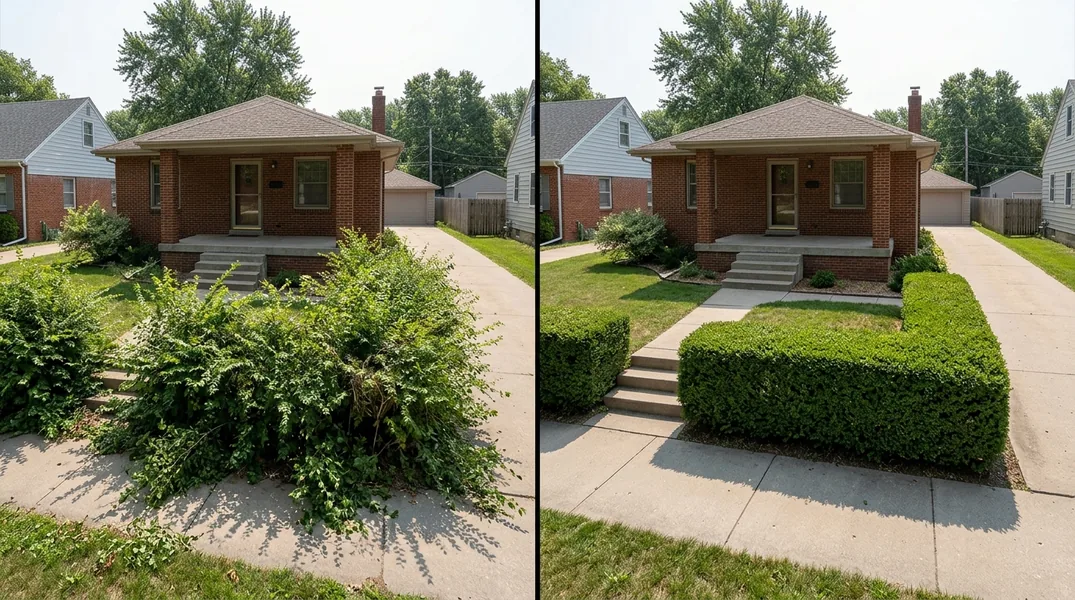
Tree Trimming & Pruning is a restorative process designed to remove damaged or diseased branches while preserving the tree's overall structure and health. When a derecho damages a tree, strategic trimming can remove broken limbs, improve air circulation through the canopy, and redirect the tree's energy toward healing and new growth. A skilled arborist will assess which branches can be safely removed and which should be retained to maintain the tree's natural form and structural balance. Trimming is almost always the preferred option when the tree's main trunk is intact and the majority of the root system remains healthy.
Tree Removal, by contrast, is a final solution reserved for trees that cannot be saved. This becomes necessary when the main trunk is split or severely damaged, when more than 50 percent of the crown has been lost, when the root system has been compromised, or when the tree has become a genuine safety hazard. Removal is also the right choice when a tree is leaning dangerously, when multiple large branches are hanging precariously, or when disease or pest infestation has made recovery impossible. The decision between trimming and removal should never be made based on cost alone, but rather on the tree's actual condition and long-term viability.
Hazard Tree Assessment Cedar Rapids: How Professionals Evaluate Storm-Damaged Trees
A proper hazard tree assessment is far more thorough than a casual visual inspection from your yard. Experienced arborists trained in structural evaluation will examine the tree from multiple angles, looking for signs of internal decay, root damage, bark stripping, and the severity of branch loss. They assess the angle of the trunk, check for cracks or splits in the wood, evaluate the condition of the root collar where the trunk meets the ground, and determine whether the tree is leaning abnormally. They'll also consider the tree's proximity to structures, power lines, and property lines, as well as how it might fail if it continues to deteriorate. This comprehensive evaluation takes into account factors that homeowners often miss.
In Cedar Rapids, where derecho damage has been particularly severe, professional assessment is more important than ever. An arborist will look at whether the tree has the capacity to compartmentalize its wounds and heal, or whether it will simply decline over time. They'll consider the tree species, its age, and its overall vigor. A young, healthy oak with significant branch damage might have an excellent recovery outlook, while an older tree with the same damage profile might be better removed. This expertise helps homeowners avoid costly mistakes, whether that's investing in trimming a tree that should be removed or removing a tree that could have been saved with proper care.
Signs Your Derecho-Damaged Tree Can Be Saved with Professional Trimming
Several positive indicators suggest that a storm-damaged tree is a good candidate for trimming and recovery. If the main trunk is straight and intact with no major cracks or splits, that's an excellent sign. If the tree still has at least 50 percent of its crown remaining, or if it has lost major limbs but the canopy structure is still recognizable, recovery is often possible. Trees that are still producing new leaves or shoots below the damaged areas are showing vitality and the ability to compartmentalize wounds. If the root system appears stable and the tree isn't leaning unnaturally, these are all positive factors that favor trimming over removal.
Younger trees generally recover better from storm damage than older trees, and certain species are naturally more resilient. Oaks, maples, and ash trees often show remarkable recovery when given professional care. If your tree displays most of these positive signs, professional Tree Trimming & Pruning can remove the damaged portions, improve the tree's appearance, and set it up for years of healthy growth. The recovery process takes time, and you won't see full restoration in a single season, but with patience and proper care, many derecho-damaged trees can return to their former beauty and function.
Red Flags That Indicate Your Tree Needs Removal, Not Trimming
Certain conditions make it clear that a tree should be removed rather than trimmed. If the main trunk is split, cracked, or broken, especially if the damage extends more than a few feet up the trunk, the tree's structural integrity is compromised beyond repair. If the tree has lost more than 50 percent of its crown, or if the remaining canopy is severely lopsided or unbalanced, the tree will struggle to recover and may develop dangerous growth patterns. Trees that are leaning significantly or that have been partially uprooted with exposed root systems are safety hazards that should be removed promptly. If multiple large branches are hanging precariously or if the tree is showing signs of disease or pest infestation alongside storm damage, removal is the safer choice.
Another critical red flag is proximity to structures or power lines. A tree that might otherwise be salvageable becomes too risky if it's close to your home, garage, deck, or electrical lines. In these cases, Emergency Tree Service may be necessary to remove the hazard safely before it causes injury or property damage. Dead or dying wood is also a clear indicator for removal, as is any tree that an arborist determines has lost the ability to compartmentalize its wounds and will inevitably decline. When in doubt, professional assessment is your best protection against making a costly or dangerous mistake.
What to Expect After Trimming: Recovery Timeline and Ongoing Care
If your derecho-damaged tree is deemed a good candidate for trimming, understanding the recovery process helps set realistic expectations. Immediately after professional trimming, the tree will look significantly different, and you might worry that too much was removed. However, the first growing season after trimming is critical as the tree redirects energy toward healing wounds and producing new growth. You should see new shoots emerging from branches below the cut points and from the trunk itself. This new growth is a sign that the tree is recovering well. Over the next two to three years, the tree will gradually fill in its canopy and regain its natural shape, though it may never look exactly as it did before the storm.
Ongoing care during recovery includes regular monitoring for signs of disease or pest problems, which can take advantage of the tree's weakened state. Avoid fertilizing excessively, as this can promote weak growth. Ensure the tree receives adequate water, especially during dry periods in the first year after trimming. Avoid additional pruning for at least one season after storm damage, allowing the tree to focus its energy on healing. If you notice signs of decline such as bark peeling, branches dying back, or pest infestations, contact a experienced arborist immediately. With proper care, most trimmed trees make impressive recoveries and become valuable assets to your landscape once again.
Emergency Tree Service Near Me: When to Call Cedar Rapids Tree Service
If your property has been impacted by derecho damage, the best first step is to call Cedar Rapids Tree Service for a professional hazard tree assessment. We understand the unique challenges that derecho damage presents in the Cedar Rapids area, and we have the expertise to help you make the right decision for each tree on your property. Whether your situation calls for careful trimming to restore a damaged tree or immediate removal of a hazardous one, we have the skills and equipment to handle the job safely and professionally.
Don't delay in getting your damaged trees assessed. Broken branches can fall unexpectedly, weakened trees can fail during subsequent storms, and hazardous conditions can worsen over time. Contact Cedar Rapids Tree Service today at (319) 774-7713 to schedule your free estimate. Our team is ready to help you protect your property, restore your landscape, and make informed decisions about the future of your trees. Whether you need emergency assessment or planned restoration work, we're here to serve you with professional expertise and genuine care for your trees and property.
Looking for a professional tree service contractor in Cedar Rapids? Cedar Rapids Tree Service responds fast for all your tree service needs.
Get a Free QuoteOur services: Tree Removal · Tree Trimming & Pruning · Stump Grinding